
Bahuang Jiushi · Culture & everyday life
Choosing a Watch Dial: Separate Decoration From Time-Reading Questions
· Bahuang Jiushi · English
Use the official Kilfor watch image to locate visible details and prepare precise questions about markings, hands and personal reading preferences.
When choosing a watch, separate the decoration you like from the cues you rely on to read the time. An official product image can help locate a preferred detail, but it cannot establish your experience of reading the physical watch. Record what is visible, what remains unclear and what needs an explanation before deciding whether to continue.
This guide uses the official Kilfor Watch listing to organise those questions. The audience wording in a product name does not determine an individual's preference. This is not a wearing, timekeeping or readability test, and it does not authenticate materials.
Find the decorative and reading details in the actual image
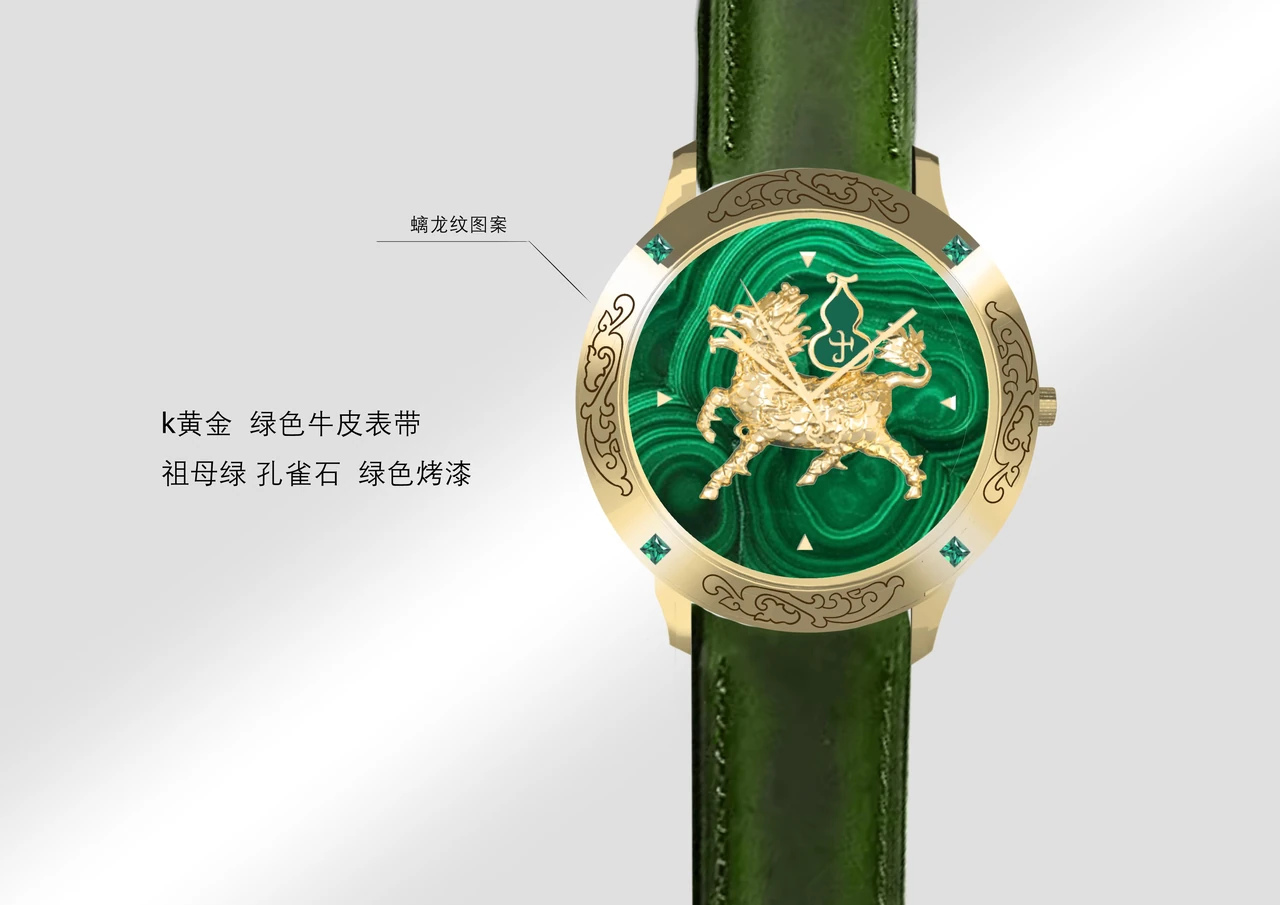
Original website image: Kilfor Watch. Its annotations and composition are retained. Text within the image is product-display information, not an independent finding by this article. Screen size, colour and reflections do not establish physical scale or tested performance.
First locate the decoration, then the features you think provide reading cues. The image shows a patterned green background, gold-coloured central decoration, diagonal hands and triangular markers around the outside. Those observations identify visible areas only. They do not establish the movement, each hand's function, marking accuracy or performance in darkness.
You might note, “The central decoration attracts my attention first,” followed by, “I would like a clearer view of the hands against the background.” The first is a preference; the second requests information. Liking the pattern does not require assuming that the reading arrangement already suits your use.
Describe your normal reading habit
Consider which cue you usually look for first: numerals, the relative positions of the hands or prominent markers. This is a way to describe your own habit, not a universal rule about a good dial. One display image is not enough to judge suitability for every person or setting.
If you prefer clear numeral references, ask which markings are present on the actual dial and whether an available front view can show them more clearly. If your question concerns the hands, specify whether you want to understand their shapes, their distinction from the background or how they appear from a particular angle. A general question such as “Is it clear?” leaves the store to guess what matters to you.
Do not infer illumination, luminous features, reflection control or readability in a particular environment from the picture. If your routine involves a specific requirement, describe it and request the relevant information. This guide does not confirm a feature that has not been verified.
Use enlargement to locate a question
Enlarging an image can help show which line or marker you mean. It can also make the dial much larger than the physical item, with different screen brightness and viewing distance. That view cannot establish that you will read the watch immediately during everyday use.
A detail that is unclear in one image is not necessarily absent from the product. A suitable additional image or an explanation may be needed. Keep the gap as a question instead of inventing markings, assigning functions to the hands or treating a decorative line as a time-reading marker.
If the store supplies another image, confirm that it belongs to the same item identifier and record which question it answers. A similar-looking watch is not an adequate substitute. Understanding one view also does not settle every condition of use.
An original fictional observation note
Imagine someone who likes this green-and-gold-coloured appearance but normally wears a watch with prominent numerals. Their note could say, “For design, I like the central decoration and green background. For use, I still need to understand the actual markings and the way the hands are distinguished.” This is a fictional exercise, not a customer review or a tested result.
They could then ask: “I am looking at item 18KJ-QIFUBIAO-LV-01. Could you explain the dial markings and hand functions, and provide any currently available clear front view? I mainly want to understand the cues used for ordinary time reading.” This does not assume that another image can be provided, or describe a personal preference as a product defect.
If the reply only explains the design story, record that the story has been supplied while the reading question remains open. When sufficient information is available, the buyer can decide whether it fits their intended use. An initial attraction to the appearance does not require proceeding with a purchase.
Bring these notes alongside the other specifications
This observation note concerns visual information on the dial. Case dimensions, strap, fastening and ordinary operation need their own confirmation. Use the separate watch specification enquiry guide to organise those items; a reading preference does not replace the other conditions of use.
Contact the store through the public details on About Us, supplying the exact product link, the location you mean and your main question. Consult the current refund policy for relevant terms and clarify any proposed trying-on or return arrangement separately. Design stories can express taste and good wishes; they are not evidence of health, career, wealth or performance outcomes.