
Bahuang Jiushi · Culture & everyday life
Two Necklaces Together? Clarify Overlap, Position and Contact
· Bahuang Jiushi · English
Use the two official necklace photos to prepare questions about simultaneous wear, without inferring layering positions or compatibility from separate product images.
Before wearing two necklaces together, identify the detail you want to keep visible on each one, then clarify their positions, possible overlap and contact during use. Liking both designs does not establish that they are suitable for layering. Product photographs cannot confirm the proportions or wearing experience of the combination. Keeping a single-necklace option is a valid decision while important questions remain unanswered.
This guide organises a decision about using two pieces together. It is not a comparison to choose one instead of the other, and it is not a tested styling recommendation. Both images below are original images from the corresponding official product pages. They are separate design references, not a simulated try-on or a comparison scaled to actual dimensions.
Identify the outline you want the first piece to retain
Consider the Top Fortune Stick Necklace as one candidate. Its photograph helps identify the elongated silhouette and decorative detail. It does not provide a measurement of chain length, weight or pendant size. Start with a preference such as “I would like the complete narrow outline to remain visible,” then consider whether adding another piece would still serve that preference.
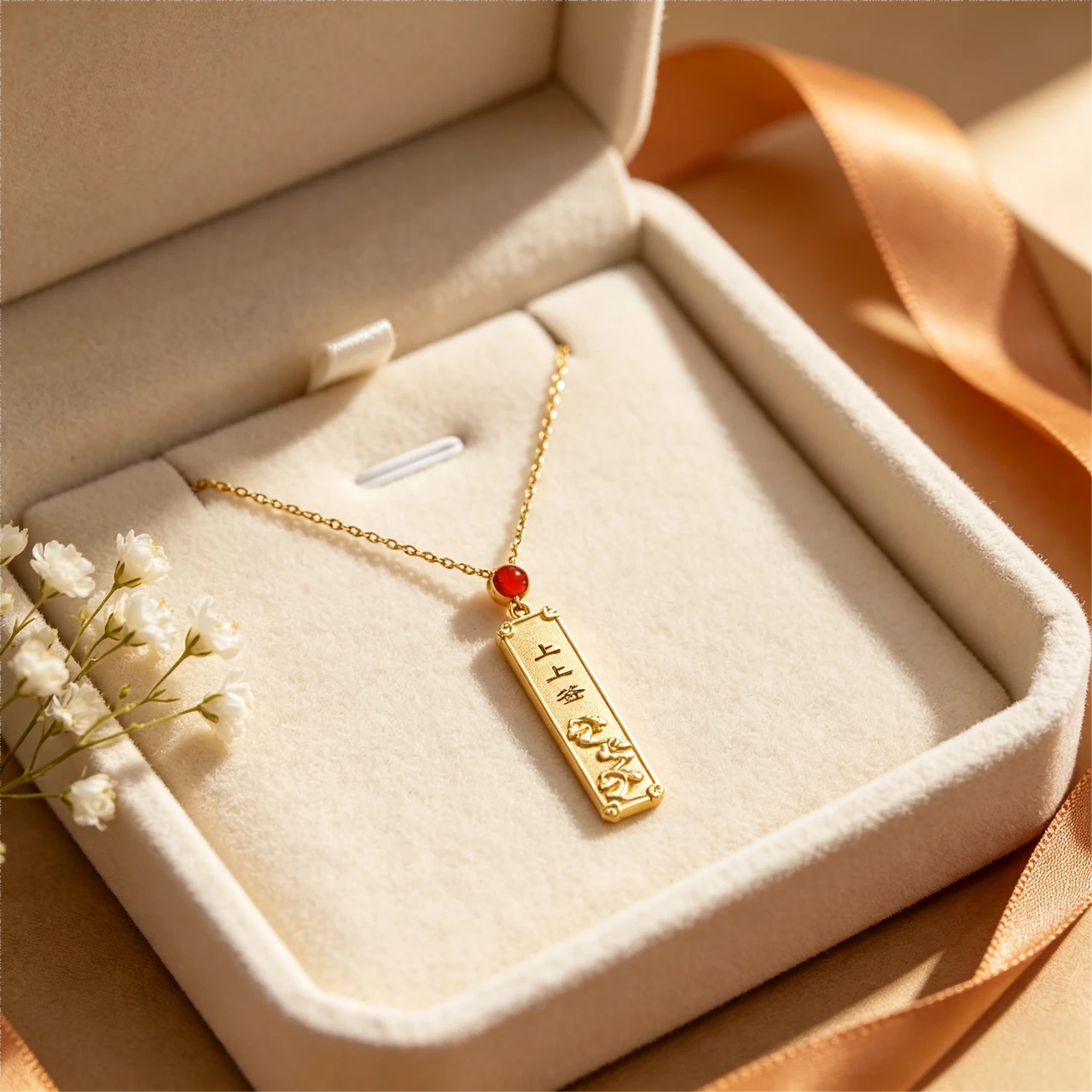
Image: the official Top Fortune Stick Necklace photograph. It identifies the candidate design; it does not show that this item and the next one have been tested as a layered combination.
If the first necklace is something you already own, record its actual name or your own identifying reference and make clear that it is not a product supplied by this shop. Keep specifications from its existing label or purchase record where available. An unknown length should remain unknown rather than becoming an assumed reference for the new purchase.
Ask a combination question when adding the second piece
Another official photograph of the Heaven-Round-Earth-Square Necklace shows a green square-shaped pendant with gold-toned detail above it. Its outline differs from the elongated fortune-stick design. That visible difference can help express a preference, but it cannot establish that the pieces will sit in separate layers, avoid overlap or remain apart when worn.
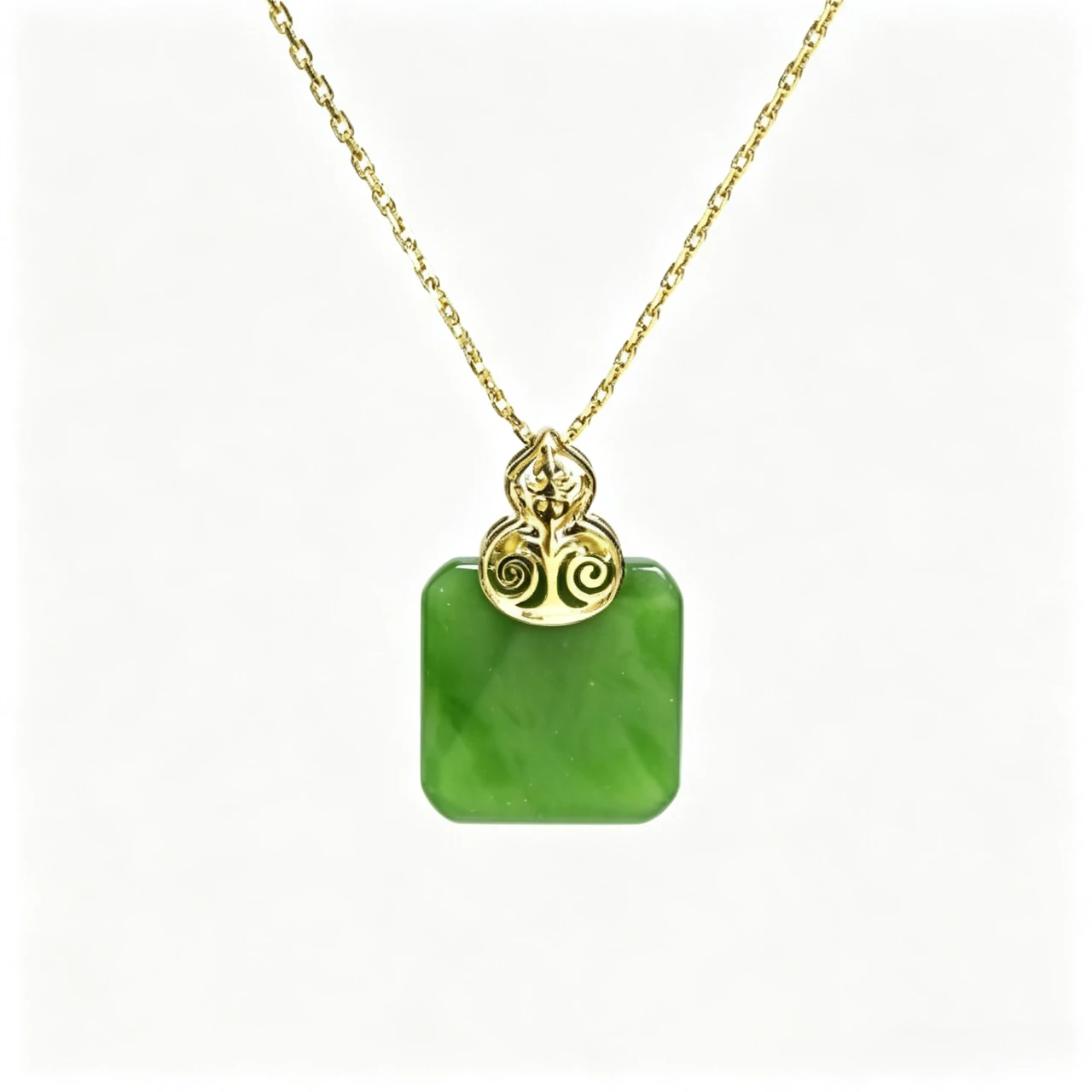
Image: the official Heaven-Round-Earth-Square Necklace photograph. Each image retains its own proportions; the two displayed images are not a comparison of the products' actual sizes.
The question is now “Could the two outlines remain visible in the way I prefer, and what use conditions still need clarification?” The product pages checked for this guide do not supply the complete specifications and layering instructions needed to confirm this combination. Suitability for using them together therefore remains an open question.
Compare single use and combined use in three rows
Make three entries in your notes: first necklace alone, second necklace alone, and proposed use together. In the first two, record the details you like separately. In the third, list questions created specifically by combining them. Without the items or a clear basis for their use, keep that third entry unresolved rather than treating an image collage as a trial.
- Visibility: which part of each design should remain visible? Would you still want the combination if one concealed the other? This records your preference.
- Position evidence: obtain chain specifications, pendant dimensions and the actual configuration for each item. Keep measurement references explicit; a difference in chain lengths is not automatically the spacing you would see when wearing them.
- Contact and use: ask whether the shop has applicable instructions for combined use and what conditions need attention. Do not infer freedom from contact, tangling or wear from a photograph.
- Adjustment scope: if a different position seems necessary, ask what options or services actually exist. Do not join fastenings, alter chains or assume that components are detachable or extendable.
- Decision conditions: specify which questions must be answered before considering layering, and whether you would otherwise wear one piece, consider another combination or defer the purchase.
This record supplies no universal length difference or fit formula. Treat your own jewellery according to its known instructions, and do not perform an unfamiliar modification to produce a visual trial. For an item you have not purchased, a focused enquiry is more useful than assuming it can simply join an existing arrangement.
A fictional decision with an unresolved result
Imagine a buyer who wants to see both an elongated outline and a square outline. Their note says: “I like each separately. Together, I would want neither main design to be hidden. I have not confirmed both sets of specifications or the conditions for combined use, so these remain candidates rather than a settled set.” This is an original fictional exercise, not a customer account or a product wearing test.
Receiving a length for one piece would not close the decision: the other specifications and the contact question could still be unresolved. If the buyer later prefers the complete outline of either necklace alone, choosing single use answers the original question. There is no need to justify an unconfirmed combination merely because two products were considered.
Take the combined-use questions to the official contact
Provide both exact product links, state which piece you own and which is only a candidate, and describe the details you want to keep visible. Ask for the specifications of each current configuration and whether applicable combined-use guidance exists. Keep replies attached to their respective item and configuration; one item's information should not silently become the other's.
For choosing just one of two designs, use the individual comparison notes. For the position of one necklace, use the chain-length and wearing-position enquiry. The additional task here is deciding whether the conditions created by simultaneous use are acceptable to you.
Use the official contact information and share only relevant neckline and jewellery details. Availability of a try-on, further photographs, combination advice or alteration service requires an explicit reply from the shop. This article promises none of those services and makes no claim that a symbolic design produces a wearing benefit.