
Bahuang Jiushi · Culture & everyday life
Where Would a Necklace Sit? Clarify Length References and Wearing Preferences
· Bahuang Jiushi · English
Use an official necklace image to separate chain and pendant measurements, neckline preferences and item-specific confirmation.
To ask where a necklace might sit when worn, describe your preferred position and confirm the current item's chain length, pendant dimensions and measurement references with the shop. A product image identifies a design; its on-screen proportions do not establish where that design will sit on you. “Visible above my neckline” is a preference, not a confirmed fit.
Identify the item with its official image
This guide uses the Heaven‑Round‑Earth‑Square Necklace as a specific enquiry example. The image below comes from its official product page, with the original proportions and colours preserved. It is not a simulated try-on. The green square-shaped element and gold-toned motif help identify the design; the image is not used to authenticate materials or determine dimensions.
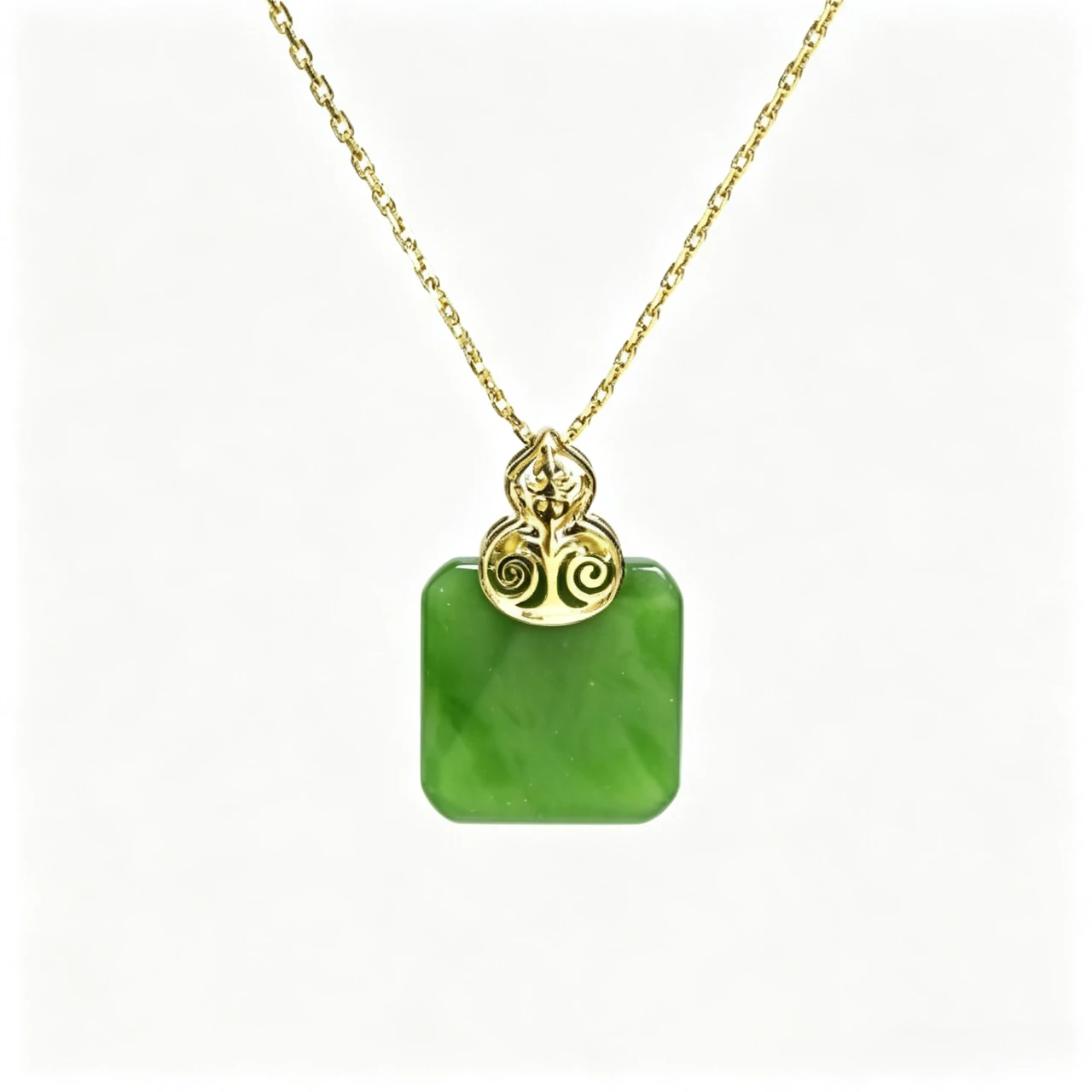
Image: the official Heaven‑Round‑Earth‑Square Necklace product image. It identifies the item; chain length, pendant dimensions and the worn position require separate confirmation and cannot be calculated from screen proportions.
If the page offers several views, include the exact link and identify the view or part you mean when asking a question. “The necklace in the picture” may be insufficient in a longer conversation. Other designs can be found in the shop catalogue, but keep each item's specifications and replies separate.
Describe the position you actually prefer
Choose a garment you would genuinely wear with the necklace and describe its neckline and the part of the necklace you want to see. For example, you might want the pendant fully visible outside the neckline, or some space between a lower neckline and the pendant. These statements describe your choice criteria; they are not effects promised by the item.
You do not need to publish personal body photographs or detailed personal information in a public comment. An initial enquiry can use a limited garment reference and a written preference. Decide with the shop what further information is relevant to the actual question. Another person's wearing photograph does not establish the position you would obtain.
If you already own a necklace that sits where you like, describe it as your own reference item. Make clear that it is not the product offered here and that the comparison is not a request to modify the new item into the same construction. A reference communicates a preference; it does not prove interchangeability or an identical result.
Keep chain and pendant measurements separate
The product page checked for this guide does not provide a complete chain-length and pendant-dimension description that establishes the worn position. Leave that information gap visible. Ask what is included in the current item and which specifications are confirmed before deciding whether the information answers your preference.
When a length is supplied, record more than the number. Ask which part of the chain it describes, whether the clasp is included and whether any selectable or adjustable arrangement is actually offered. An apparent connecting ring in a photograph does not establish an extension, adjustment or alteration service. Unanswered options remain unconfirmed.
Record pendant dimensions separately, identifying whether the figures describe the complete outer form or a particular component. Do not simply add chain length to pendant height and present the total as a confirmed distance from a garment neckline to the pendant's lower edge. The actual worn position still needs item-specific consideration. This article provides no universal fit formula.
Prepare a wearing-position enquiry card
- Candidate item: exact name, link and the configuration currently under discussion.
- Clothing context: the neckline and the part you want visible, described as a preference.
- Personal reference: an item you already own, if useful, with any information taken from its existing label or purchase record.
- Product specifications: shop-confirmed chain and pendant figures, units, measurement references and configuration.
- Open questions: included components, actual options, further information needed and the confirmation process the shop can offer.
- Decision conditions: the information that matters most to your choice and what remains insufficient to decide.
If your reference item's label does not explain how its length was measured, record that limitation too. Do not invent a figure or rename measurements with different meanings simply to make two columns appear comparable. The purpose is an answerable question, not a table with every blank filled.
Try a fictional enquiry
Imagine a shopper who likes the Heaven‑Round‑Earth‑Square design and wants to wear it with her own round-neck top without the neckline hiding the pendant. A purchase record gives a length for an older necklace she likes, but does not say whether its clasp is included. This is an original fictional exercise, not a customer account, try-on or product test.
She could ask: “I am considering this necklace and would like the pendant fully visible with my round-neck top. Could you explain the length and measurement reference for the chain currently included, the overall pendant dimensions and any configurations actually available? I own a necklace whose position I like, but its measurement reference is unclear, so I am using it only to describe my preference.”
If the reply supplies only the chain length, record that answer and retain the pendant and configuration questions. “Length received” does not mean “fit confirmed.” If the shop asks for further information, clarify what is needed and how to provide it. Willingness to discuss the question does not itself promise a try-on, alteration or custom-making service.
Use the reply without expanding its scope
Keep the reply date, associated item and configuration with your original decision conditions. An answer about one configuration does not automatically apply to another. Enjoying the position of an existing necklace also does not prove that a different item will feel the same. If essential information remains unconfirmed, continue the enquiry or defer the choice.
This guide addresses one necklace's length references and your preferred position. The two-necklace comparison notes support broader design and information comparisons, while the bilingual product-page method preserves the original wording across languages. Neither replaces confirmation of the specific specifications.
Use the official contact details on About Us to share the product link and enquiry card, and ask which information and confirmation arrangements the shop can provide. Read the current return and refund information before ordering. Do not assume that trying on, alteration or an unsuitable size all have the same conditions. Product information and service arrangements remain subject to the scope confirmed during the actual enquiry and purchase.