
Bahuang Jiushi · Culture & everyday life
Can Your Existing Chain Be Used With a Necklace Design You Like?
· Bahuang Jiushi · English
Use the Top Fortune Stick Necklace as a visual reference, confirm component and service scope, and prepare chain identity and connection questions without assuming compatibility.
If you want to use an existing chain with a necklace design you like, first ask whether the product has separable components and whether a pendant is available separately. Then ask the shop what it would need to assess the connection. A picture showing a chain and a decorative drop does not establish that you can separate them yourself. A thin-looking chain is not evidence that its end will pass through the relevant opening.
Identify the exact product first
This guide uses the website's Top Fortune Stick Necklace as a specific enquiry reference. It is presented as a necklace. The image identifies the design; it does not announce a separation, alteration or pendant-only service. Use the product catalogue to find other designs, and include the exact product link rather than asking about “the gold-coloured necklace.”
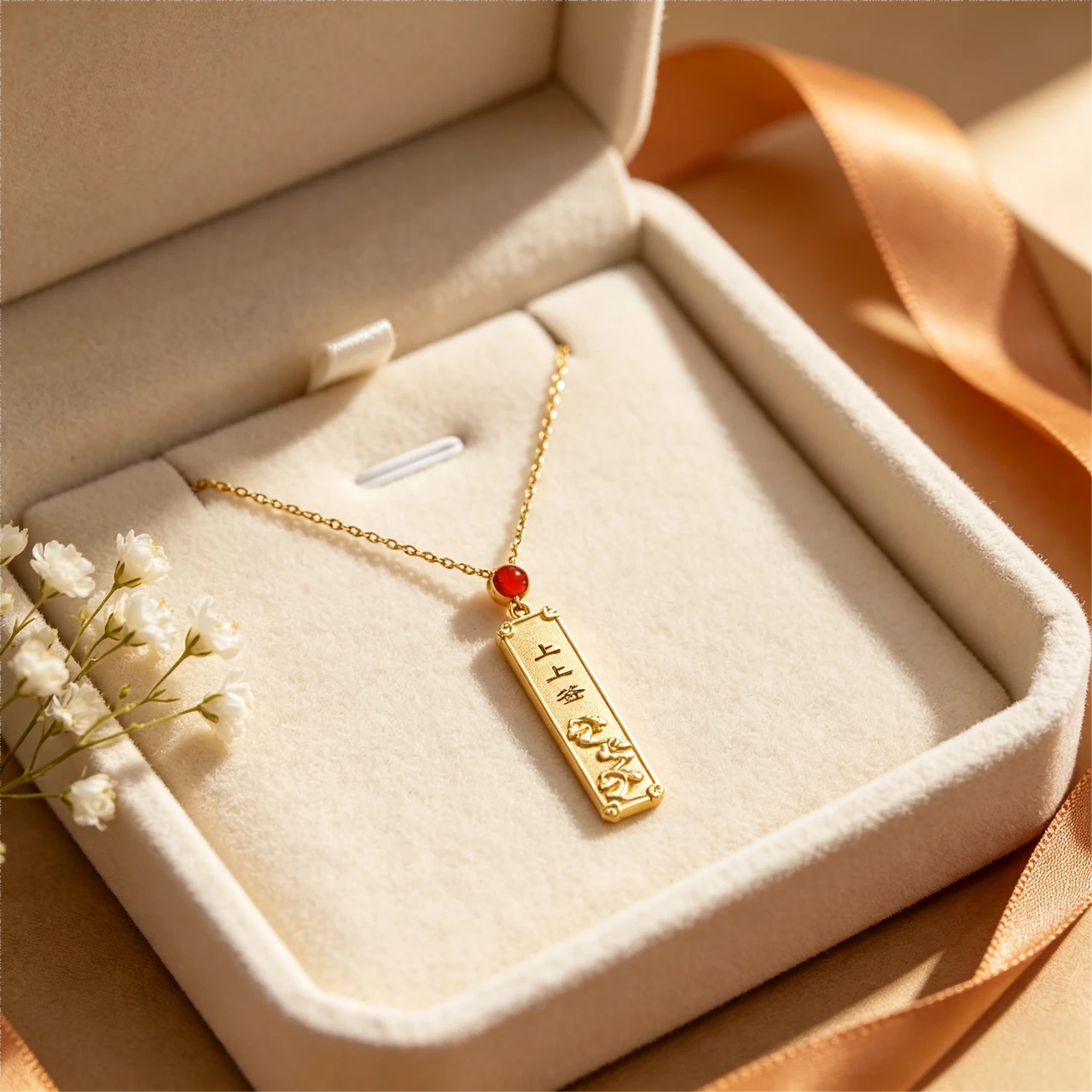
Image: the original website image for the Top Fortune Stick Necklace. It identifies the item being discussed. Connection dimensions, separation methods and compatibility conditions still require confirmation from the shop; image proportions are not measurements.
You may like the visual combination of this design and your own chain. Describe that preference, but keep appearance separate from the physical connection. Similar colours do not establish matching materials, and a pleasing combination does not establish compatibility. This article does not authenticate materials, infer stock or describe cultural symbolism as a wearing effect.
First question: can a separate component be discussed?
Ask whether the chain and decorative component are designed to be separable, whether individual components are supplied, and whether the shop can discuss use with a customer's existing chain. These are questions about the product and service scope. They are not instructions to dismantle a purchased item. If the actual offer is a complete necklace only, make your choice within that confirmed scope.
Do not assume a visible ring is intended to open. Do not pry a connection, pull a chain through by force or bend a component to collect measurements. If your existing chain has visible wear, deformation or a known repair history, describe what you know and ask what further information is appropriate. Looking intact is not the same as having been inspected.
Second question: which connection needs checking?
Only after the shop confirms that compatibility can be discussed should you ask which views or records it needs. The chain body, end fitting, clasp and intended opening are different locations. A single answer to “How wide is the chain?” may leave the relevant question unresolved. Ask which part to show, from which direction, and which dimensions require a professional assessment.
Record a name or working identifier for your own chain, any existing specification source, photograph identifiers for the end fittings, and the remaining unknowns. If a dimension is absent from the available label or documentation, mark it unknown. A magnified photograph without an appropriate scale is not a measured specification. There is no need to dismantle an item to complete the enquiry sheet.
Two chains can look equally fine along their length while still needing separate confirmation at their ends. Keep the answer associated with the particular chain examined. Do not automatically apply an answer about chain A to chain B. A reply saying that the shop can look at photographs indicates a next information step; it is not yet a compatibility decision.
A short enquiry record that leaves room for an answer
- Candidate product: the exact page and name, plus whether you are asking about the complete necklace or a possible separate component.
- Existing chain: a distinguishing identifier, the source of any available specifications, and known use or repair history.
- Intended use: whether you want to retain your own chain or are only comparing appearance; keep those questions separate.
- Connection information: photograph locations and identifiers requested by the shop, with sourced dimensions separated from unknowns.
- Open questions: whether components separate, whether separate supply exists, who needs to inspect the connection, and what can actually be confirmed.
- Next arrangements: if physical inspection is needed, confirm receipt arrangements, charges and service conditions before sending anything.
These are communication fields, not order options or a new service offer. The gift-shopping information checklist provides a related way to keep product identity, displayed currency and delivery questions distinct.
Two fictional enquiries with different information gaps
In the first exercise, a reader owns chain A and knows only that its body looks fine. They like the Top Fortune Stick design. A useful question is: “Please first confirm whether this product has a separable or separately supplied component. If compatibility can be discussed, which parts of chain A would you need information about?” The reader does not say that the chain will certainly pass through or ask the shop to guarantee an outcome without examining the connection.
In the second exercise, the shop has explained that a particular end fitting needs to be considered, and the reader finds another chain, B. The reader gives B its own information record and asks whether the previous answer applies. Even identical names on old purchase descriptions do not remove the need to identify the current object. Both situations are original communication exercises, not actual orders or confirmation that this service is available.
Confirm the next step before buying or sending an item
Use the public contact information on About Us to send the precise product link and the relevant questions. First establish whether the shop can provide the requested answer. If additional service, inspection or shipping is involved, wait for an agreed arrangement. A public business address does not by itself mean that a parcel has been accepted for inspection.
Read the current returns and refund information before purchase, and ask which conditions apply to your specific situation. Do not assume that trial fitting, separation or an alteration leaves return conditions unchanged. Keep the actual reply with the product link and chain identifier, then decide within the confirmed scope. An unanswered connection question remains unanswered.