
Bahuang Jiushi · Culture & everyday life
How Does a Necklace Fasten? Ask About the Exact Item Before Buying
· Bahuang Jiushi · English
Use the official product image to identify the necklace, then ask about its fastening point, instructions and your daily wearing routine.
If you are unsure how a necklace opens and fastens, first confirm the fastening point, the instructions for that exact item and any help you expect to need. Then consider whether the arrangement suits your routine. A front-facing product image can identify the design without showing the chain ends; the presence of a chain does not establish its clasp type or how to use it.
Identify the item before asking about the fastening
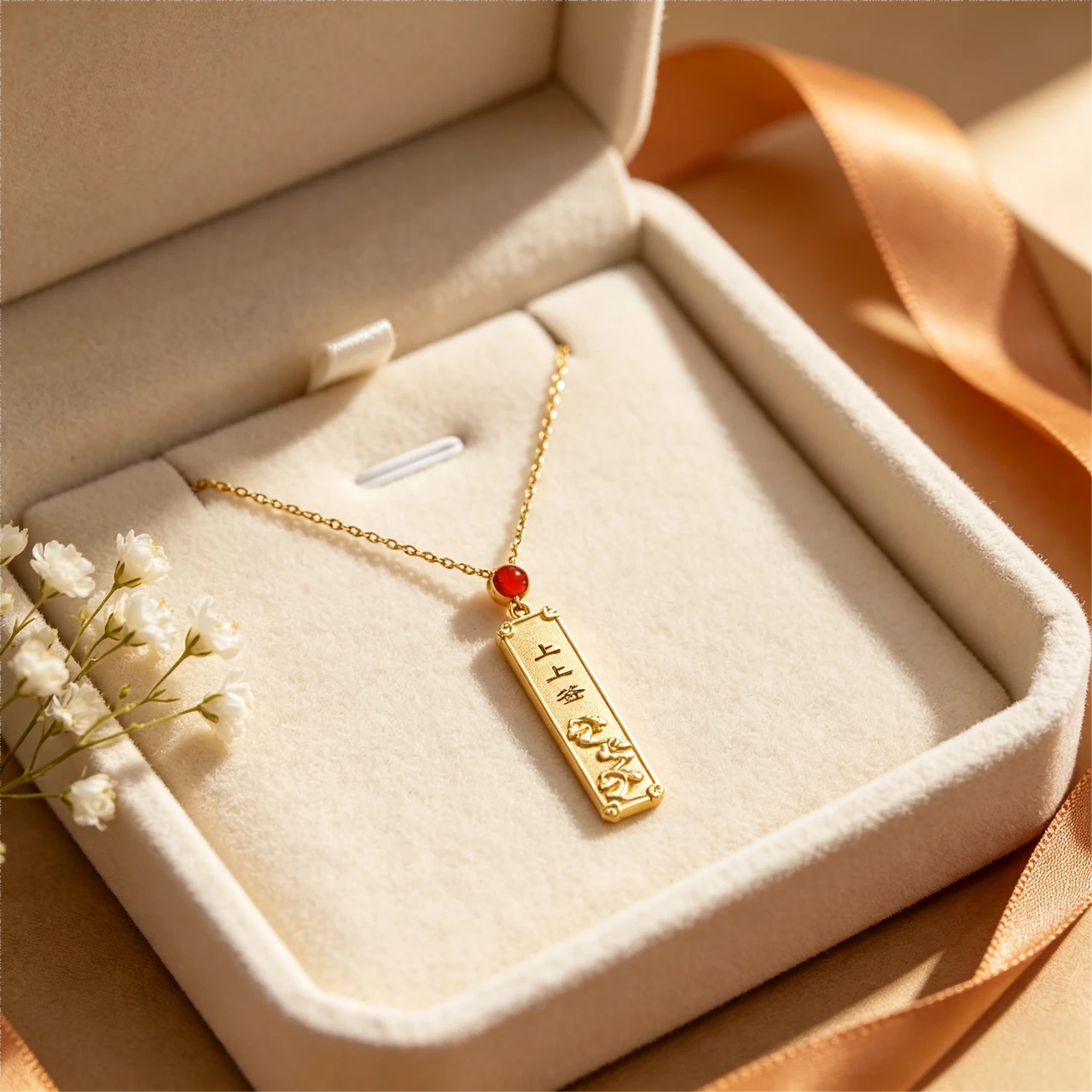
Official product image: Top Fortune Stick Necklace. The pendant and chain identify the item being discussed. This front-facing display does not establish the chain-end fastening, opening method or ease of independent use. The pictured box is not proof of what is included with a purchase.
This guide uses one actual product as an enquiry example. It does not report a physical inspection, a fastening test or a confirmed clasp design. Start from the product catalogue and the exact item page; instructions for a different necklace are not a substitute for this product’s explanation.
Say which connection you mean
“Does this open?” can refer to different parts. You may mean the chain-end fastening used when putting on the necklace, or the connection between the pendant and chain. Describe the action you want to complete, then ask the shop to identify the relevant part. Keep those two questions separate.
If the question concerns using a chain you already own, see the chain and pendant connection enquiry guide. The present guide concerns putting on, fastening and removing a necklace in ordinary use. It does not recommend removing the pendant, replacing a clasp or adding components yourself.
Ask for instructions before judging convenience
Ask whether the shop can provide a clear image or explanation of the chain ends for the exact item, and identify the part intended for routine opening. A small ring or adjacent metal component in a picture is not enough to establish that it should be opened. Until the appropriate instructions are available, do not infer a method involving bending, pulling or tools.
Describe your own preference next. For example, you may prefer to put the necklace on independently, or normally have someone available to help. This is a personal arrangement, not proof that a particular mechanism is easy or difficult. A product image cannot test handling, convenience or worn appearance for a specific person.
If a demonstration is supplied, confirm the item and current configuration it shows. Check whether it answers all three questions: opening, fastening again and removal. Another person completing an action once does not establish that you will handle it in the same way. Ask about any remaining uncertainty without turning a purchasing question into a judgment about your abilities.
A compact fastening enquiry card
- Item: exact name, product link and configuration being discussed, so information about different chains is not mixed.
- Location: ask the shop to identify the routine fastening point and distinguish it from the pendant connection.
- Instructions: how the exact item is opened, fastened and removed, plus any item-specific precautions the shop states.
- Personal routine: whether independent use is preferred or assistance is available; include only information relevant to the choice.
- Confirmation: whether the response is a photograph, written explanation or demonstration, and which questions remain unanswered.
- Next decision: continue the enquiry, retain it for comparison or set it aside; do not record unconfirmed convenience as a product fact.
This card is not an operating manual. Actual actions need the appropriate product instructions; the questions do not establish a method by themselves. The care enquiry guide can help organise a related care question, but care information is not permission to dismantle the item.
Replace “Is it easy to wear?” with a specific enquiry
Here is an original fictional enquiry, not a buyer review: “I am considering the Top Fortune Stick Necklace and would like to understand the chain-end fastening. I normally prefer to put a necklace on and take it off myself. Is an image of the chain ends or a set of instructions available for this item? Please identify the part used for routine opening and any parts that should not be operated.”
If the response only supplies another front-facing pendant image, the item is clearer but the chain-end question remains open. Identify the missing view rather than marking the wearing instructions as confirmed. If the shop describes more than one configuration, first establish which one is being discussed before comparing subsequent information.
Confirm the purchase arrangements separately
Use the About Us and official contact page to send the product link and the questions that matter most to the choice. Unrelated personal details are unnecessary. If the current configuration does not match your preference, you can ask about alternatives, but availability, cost and service conditions need an explicit response; a free clasp replacement or custom arrangement must not be assumed.
Before ordering, check the current item, price currency, delivery arrangements and after-sales policy. Understanding the fastening instructions can help with a personal choice. It does not guarantee handling, stock or delivery timing, and unanswered questions should remain unconfirmed.