
Bahuang Jiushi · Culture & everyday life
Reading the Ruyi Ring Design: Angular Lines, Curves and Open Space
· Bahuang Jiushi · English
Use two official images of the Good Fortune & Auspiciousness Ring to describe visible lines, separate personal preference from product claims and prepare specific questions.
When considering the Good Fortune & Auspiciousness Ring, start with the lines you actually like: the more angular, character-like element, the curved cloud-like outline, and the open spaces between them. Describe what you can see in the official product images before reading the shop's explanation of the design. Then separate your visual preferences from the questions that still need an answer before purchase.
Identify the ring before interpreting its outline
This article concerns only the website's Good Fortune & Auspiciousness Ring. The product page describes a combination of the “mouth” component of the Chinese character Ji and auspicious cloud motifs. That is the shop's explanation of this item's design. It is not an independent authentication of historical origin, materials or effects. Use the product catalogue to return to the exact item rather than asking about an unspecified gold-coloured ring.
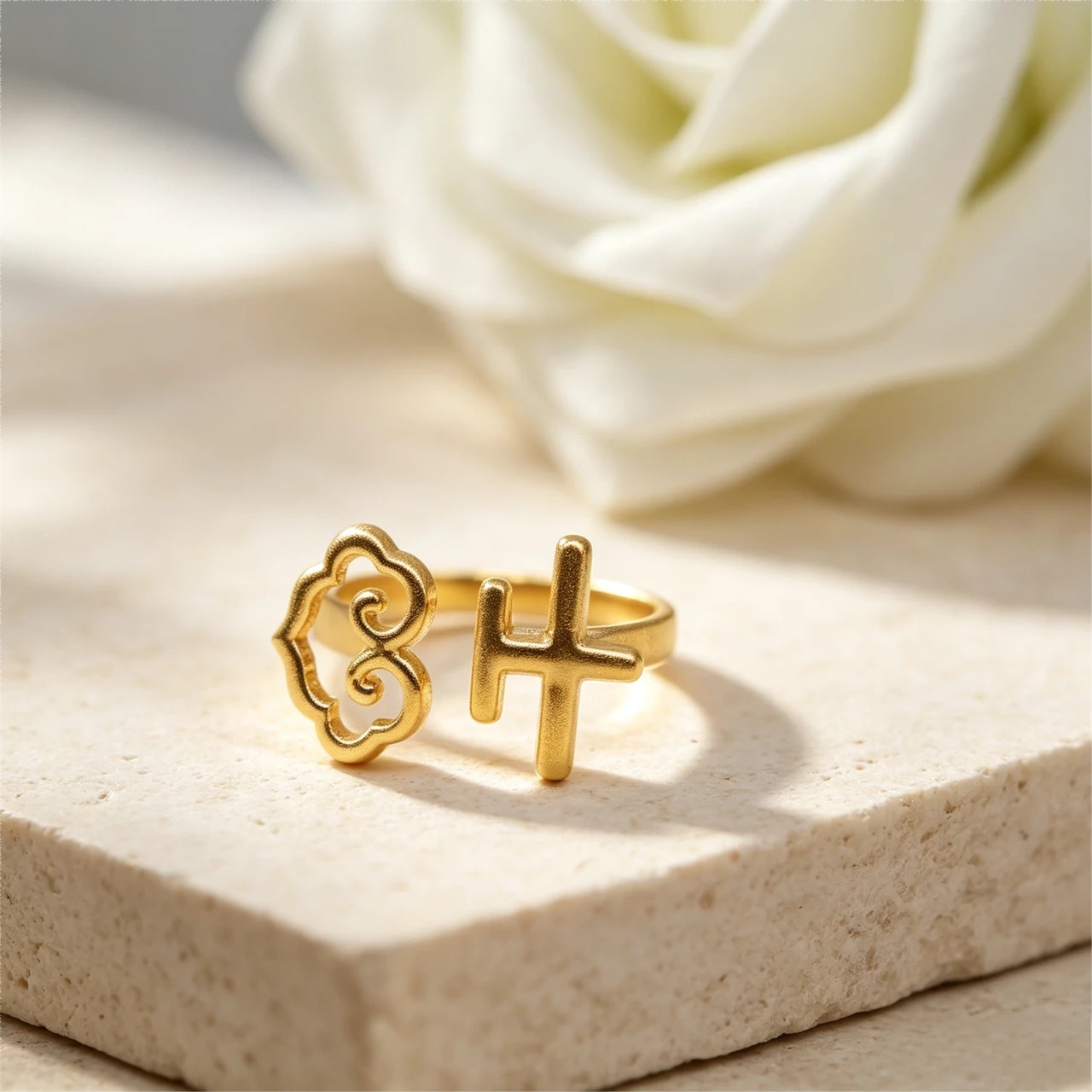
Image one: the website's Good Fortune & Auspiciousness Ring. Look first at the arrangement of the outline and openings. The pale stone and flower belong to the photographed setting; this image does not establish that they are supplied with the product.
There is no need to give every line a cultural name immediately. Begin with plain observations: one area curves, another is more angular, and part of the design is left open. Then compare those observations with the product description. Recognising a shape and establishing the origin of a tradition are different tasks. A detail you cannot confidently identify can remain a question for the shop.
Look at the two kinds of line separately
On the first pass, concentrate on the more angular element. Where do the lines turn, and what space do they enclose? Do you prefer the distinct corners, or the variation created by a design that does not look fully symmetrical? These are questions about personal taste. You do not need to read the image as a complete calligraphic character, and a photograph alone does not establish the manufacturing method.
On the second pass, look at the curved element. Follow the changing outline, its position beside the angular area and the gaps that help distinguish the two. “I prefer the outline on the curved side” is a usable preference statement. It does not require a claim that the item will suit a particular hand shape or outfit. These are product images, not wearing demonstrations, so they do not show the ring's apparent size or prominence on a particular person's hand.
Finally, look at the combination again. If what you like is the contrast between the two kinds of line, make that combination your stated reason. If you prefer only one side, record that instead. The product name does not oblige you to describe every design element as a favourite.
Use a second image to separate the design from its setting
The next official image places the same ring inside a box. This different display setting helps you return to the lines you identified and ask whether they remain the focus of your interest. It does not show a second product, establish dimensions, confirm what packaging is included or demonstrate a wearing result.
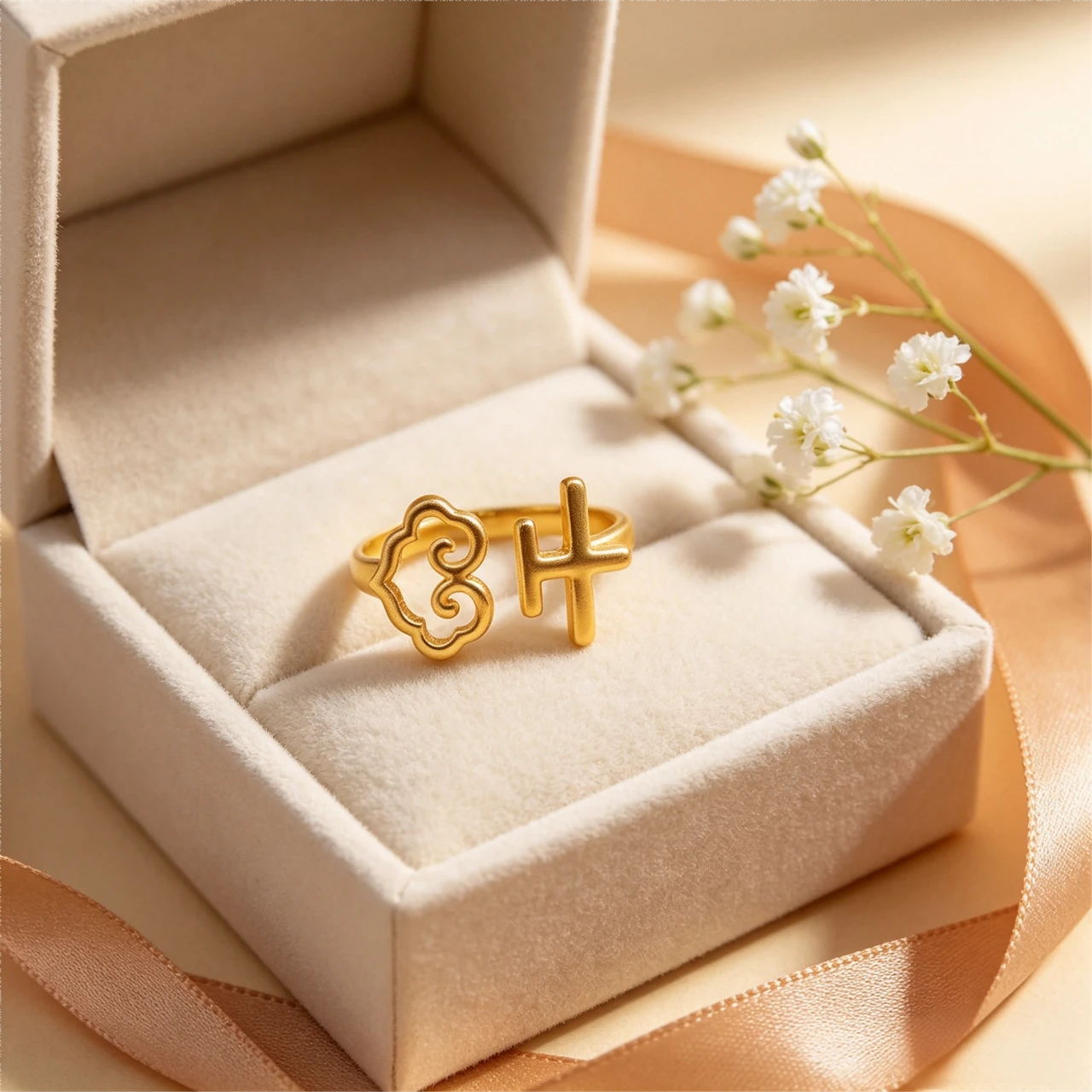
Image two: another website image of the Good Fortune & Auspiciousness Ring. Compare the visible outline of the same design in a different setting. Ask the shop separately whether any box, ribbon or other presentation item is included in the actual purchase.
Instead of deciding which photograph looks more expensive, imagine a plain background and ask whether the feature you like would still hold your attention. The first image may draw you toward the curved outline while the second makes you notice the angular structure. Record both observations; there is no need to force the two photographs to produce an identical impression.
Do not estimate millimetre dimensions, weight or material fineness from these views. Nor should differences in screen brightness become a promised product colour. The images help locate the part of the design you want to discuss. Specifications needed for purchase still require the product information and an appropriately specific answer.
Make a short preference card
- Product identity: the exact name and link, so the enquiry remains about this particular ring.
- Image location: image one or image two, and whether you mean the curved side, angular side or the open space between them.
- Visible description: the outline you can actually see; a light-looking appearance is not a measured weight.
- Reason for interest: perhaps the contrast of lines, the openness or the less symmetrical arrangement, clearly recorded as your own impression.
- Question to confirm: something the page does not explain, or a detail you have not understood, left open rather than answered by imagination.
- Purchase decision: what you already know and which outstanding answers are still necessary for your choice.
This is a manual shopping exercise, not a new product specification or a form that requires personal information. For a gift, start with aesthetic preferences the recipient has actually expressed. Their age, identity or a general wish of good fortune does not establish which design they will enjoy.
A fictional example of a useful preference statement
Suppose a reader likes the angular lines in image one but is less certain about the curved motif. They might write: “I notice that the two sides have different outlines, and I prefer the more angular area. Could you explain which part corresponds to the character element in the description? I have not yet formed a view about how it would look when worn.” This identifies the question more precisely than asking only for a ring with a positive meaning.
Another reader might say: “I like the variation created by the two outlines together; I do not need to treat it as a guarantee of an effect.” In this case, the preference comes from personal observation. Both statements are original communication exercises. Neither is a customer review, an actual purchase record or an answer already supplied by the shop.
Continue with the product link and a specific question
Open the linked product page and check the current description. If something needs clarification, use the public contact information on About Us, providing the product link, image location and a concise question. Keep what you saw, what the page states and what remains unanswered in separate parts of your notes.
For actual purchase conditions, read the current returns and refund information. Symbolism can form part of cultural or personal expression; this article does not turn it into a promise about health, fortune or any other outcome. Liking the design is a reason to investigate the item. Once the necessary conditions have been confirmed, the purchase choice remains yours.