
Bahuang Jiushi · Culture & everyday life
Pairing a Necklace with Your Earrings: Choose a Visual Focus
· Bahuang Jiushi · English
Keep an outfit and your existing earrings consistent, compare personal styling choices, then clarify the dimensions of a necklace you like.
When choosing a necklace to wear with earrings you already own, first decide where you want the emphasis: beside your face, near the neckline, or on the clothing itself. Put on the intended outfit, compare arrangements using your own jewellery, then record a necklace design you like separately from dimensions you still need to confirm. This gives you a clearer starting point than assuming every piece must belong to a matching set.
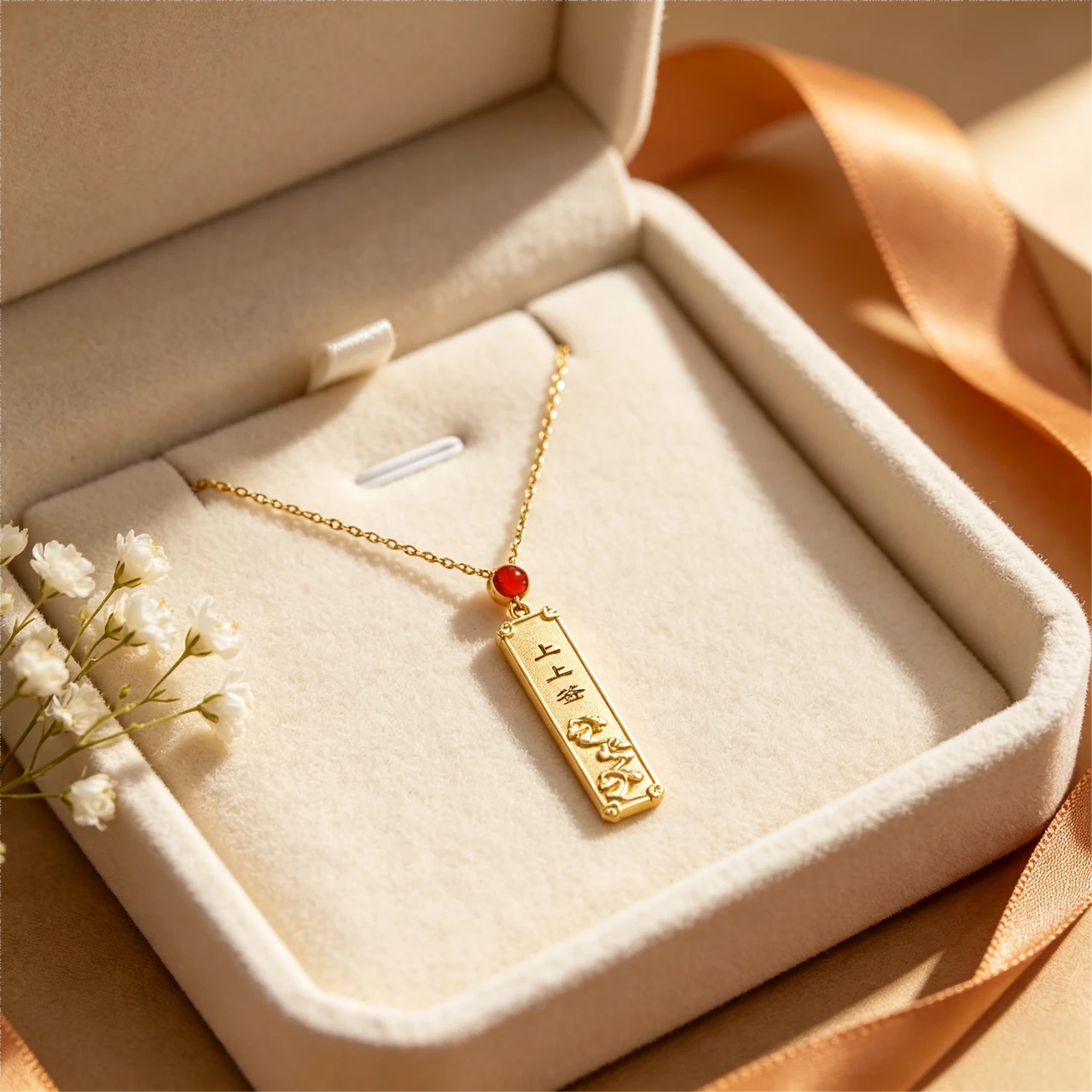
Figure 1. The official product image of the Top Fortune Stick Necklace. Look at its overall outline and red accent before deciding what role you want the necklace to play in an outfit. View product.
The following is a personal styling exercise, not a universal rule. The earrings are items you already own; this article does not establish that Bahuang Jiushi sells earrings or matching sets. Product photographs also do not replace trying on an item.
Keep the clothing and existing earrings consistent
Start with an outfit you actually expect to wear, such as a familiar shirt, instead of imagining several different styles at once. Look at the visible neckline, any clothing pattern and your earrings together. Write down the detail you most want to retain.
You might say, “I like the round outline of these earrings,” or, “I would like one distinct motif near this plain neckline.” The first gives the earrings the leading role; the second suggests a role for a necklace. Describe what you want to see without presenting it as a rule that applies to everyone.
If you do not want to change the clothing or earrings, keep them fixed for this exercise. Changing both at the same time can make it harder to identify which difference you actually prefer.
Compare three arrangements with items you own
Use familiar pieces that you already know how to wear. You do not need to buy anything for the exercise, alter a clasp or connect components that were not intended to go together.
- Keep only the earrings. With the same outfit on, consider whether the arrangement already gives you the effect you want. If it does, you may decide to wear no necklace that day.
- Add an existing necklace. If you have a suitable reference piece, wear it normally and observe its relationship with the earrings and neckline. Record your impression, such as “I notice the earrings first” or “The motif near the neckline stands out more.”
- Remove one detail. From an arrangement you have tried, remove one piece or return to a simpler item you know well. Change just one element so you can describe the difference you prefer.
You do not have to use all three arrangements, and the exercise does not conclude that fewer accessories are always better. You may enjoy several visible details or prefer more open space. The aim is a choice you can explain in your own words.
Give a candidate necklace a specific role
Once you know what you want the necklace to contribute, look through the current products. The Top Fortune Stick Necklace description checked on October 21, 2026 combines cloud motifs with a fortune-stick silhouette. Those design elements can help you describe your preference: “I would like the stick shape and cloud details to be noticeable near a plain neckline.”
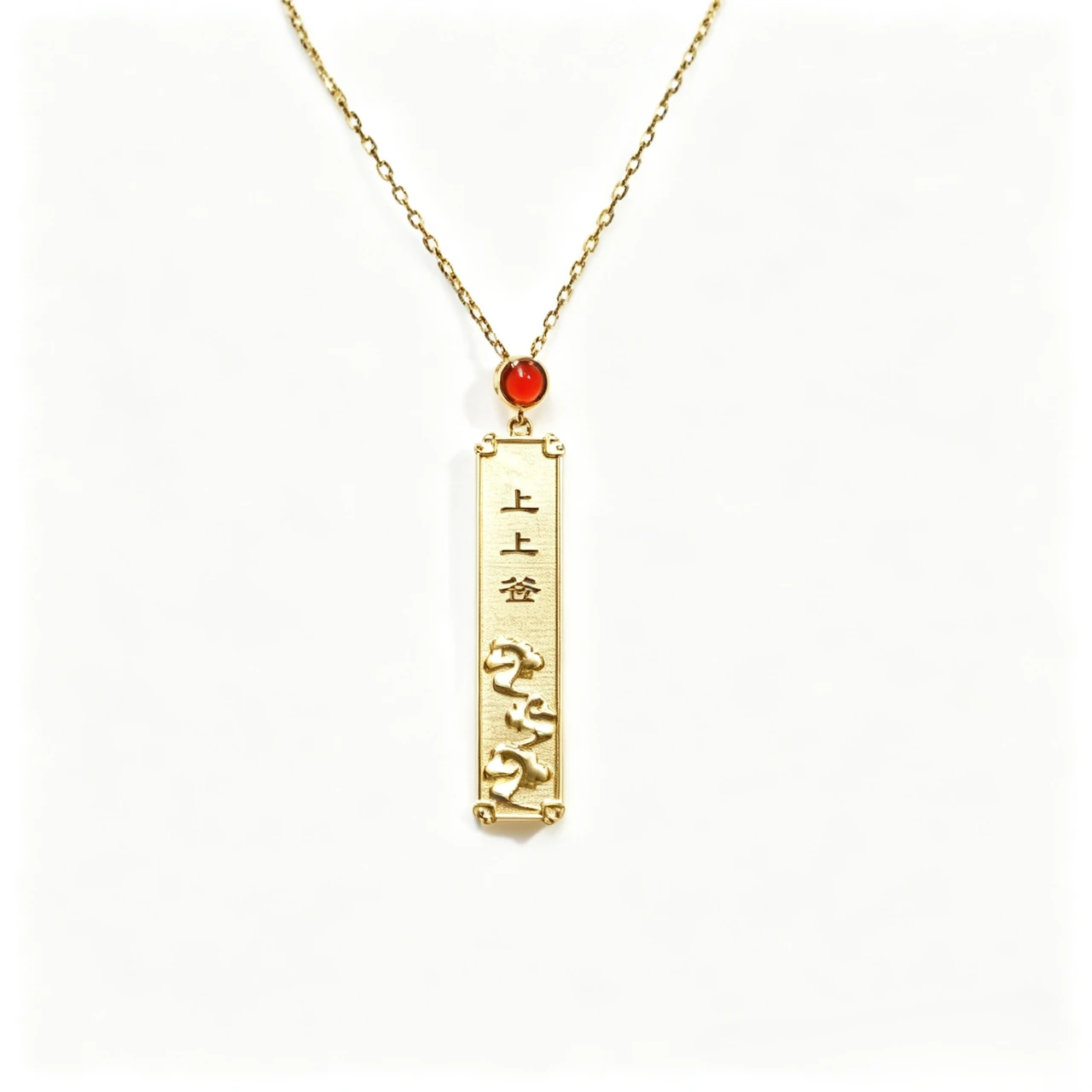
Figure 2. A front view of the same necklace against white, for examining the stick silhouette and cloud details. It does not establish the scale or position when worn. View product.
That is a direction for selecting a design. It does not establish the necklace's actual scale, position or wearing effect on you. The product page read for this article does not state numerical chain length, pendant dimensions or weight. The size of an image on a webpage cannot be transferred directly to your clothing as an accurate scale.
If you do not have the item, keep its link beside your outfit note for discussion. An arbitrarily resized screenshot placed over a photograph is not an accurate fitting. If you make a visual sketch simply to explain a preference, label it as such and keep the dimensions marked unconfirmed.
Two original examples of different choices
These are fictional personal styling notes. They are not customer experiences, fitting tests or recommendations made by the shop.
The first shopper plans to wear a plain shirt and a familiar pair of small studs. Her note reads: “I would like a clear design detail near the neckline, so I want to learn more about the Top Fortune Stick silhouette and cloud motifs. I will keep the studs unchanged. I need the chain length and pendant dimensions before considering whether the item could sit where I would like it.” This identifies an open question without turning a design preference into confirmed suitability.
The second shopper wants to emphasise a pair of decorative earrings already in his collection. After comparing familiar arrangements, he writes: “The earring outline is what I want to keep today. Personally, I find the necklace adds more detail than I want with this outfit, so I will leave it out. On another day, I can try a different arrangement with a necklace as the focus.” Choosing not to add a necklace also completes the decision; there is no need to buy an extra piece just to make a set.
The examples reach different answers because the preferences differ. You can keep just their three questions: what do I want to emphasise, what will stay unchanged, and which missing detail could change my decision?
Separate the preference from the product question
For an enquiry, use one line to describe your intention: the neckline you usually wear, the outline of your existing earrings, and where you would like the necklace to draw attention. Use a second line for the product questions: “Please confirm this item's chain length, pendant dimensions and current included components. What further information would help clarify the wearing arrangement?” Leave measurements unknown until they have been supplied.
If you are still choosing between two necklaces, continue with the design and wearing-condition comparison guide. This article helps establish the role of a necklace within an outfit; the comparison guide helps check the conditions of individual products. You can handle those decisions separately.
Contact the store through the official details on this page or About Bahuang Jiushi, with the product link and the questions that matter most to your choice. If you share a photograph, only the relevant clothing and jewellery need to be shown. Ask separately whether further photographs, fitting or styling services are available; this article does not promise them. A design's symbolism also does not establish an effect on health, career or fortune.